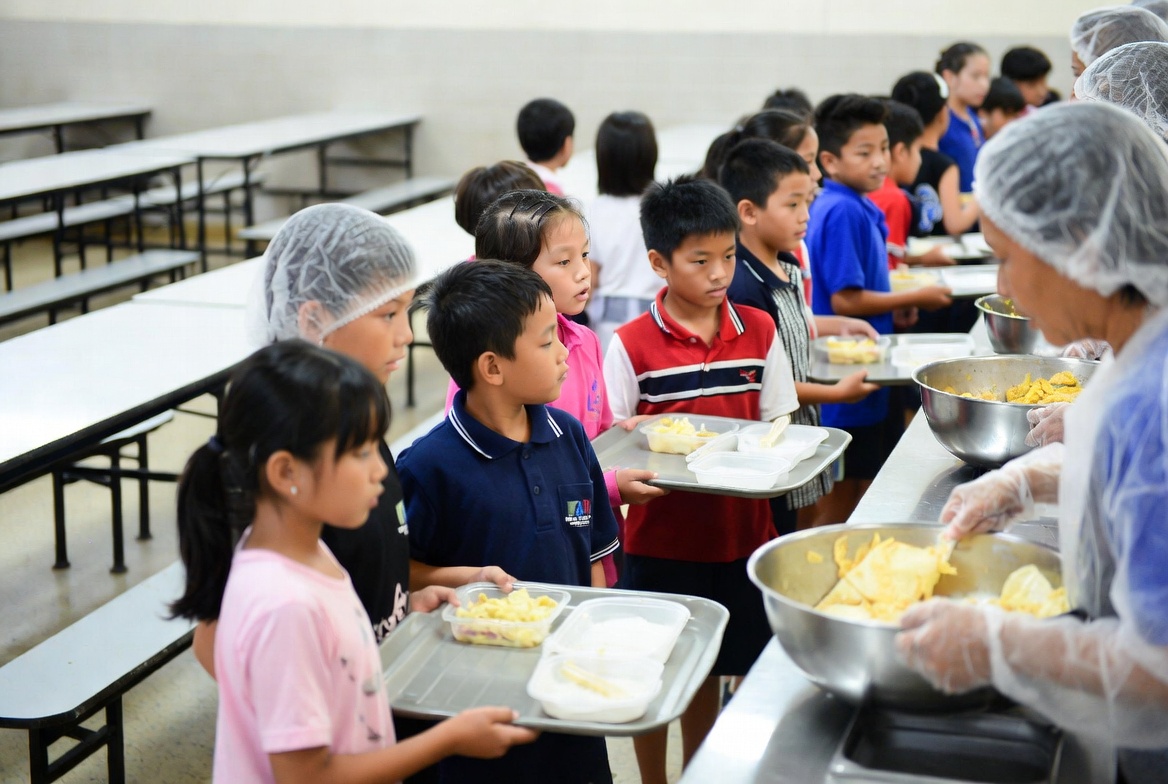
Free School Meals: Breakfast and Lunch Programs for Kids
The National School Lunch and School Breakfast Programs help millions of children get nutritious meals each school day. Here is what parents need to know about these important programs.
Who Qualifies?
- Free meals: Family income at or below 130% of poverty level
- Reduced-price meals: Income between 130-185% of poverty level
- Automatic eligibility: Families receiving SNAP, TANF, or certain other benefits
- Community Eligibility: Many schools now offer free meals to all students
How to Apply
Complete the application provided by your child’s school at the beginning of the year. You will need household income information. If your circumstances change during the year, you can apply at any time.
Summer and Afterschool Meals
Free meals continue when school is out through Summer Food Service Programs and afterschool meal programs. Find locations by calling 211 or texting FOOD to 304-304.
National School Lunch and Breakfast Programs
The National School Lunch Program and the School Breakfast Program are federally funded programs that provide free or reduced-price meals to children from low-income families at participating schools. Nearly 100,000 public and private schools participate in these programs nationwide. Children from households with incomes at or below 130 percent of the federal poverty level qualify for free meals, while those with incomes between 130 and 185 percent qualify for reduced-price meals, which cost no more than 30 cents for breakfast and 40 cents for lunch.
To apply, parents or guardians fill out a simple application form available from their child’s school. The form asks for household size, names of all household members, and income information. Households that participate in SNAP, Temporary Assistance for Needy Families, or the Food Distribution Program on Indian Reservations may be automatically eligible without providing additional income documentation. Foster children are also automatically eligible for free meals.
Community Eligibility Provision
The Community Eligibility Provision, known as CEP, allows high-poverty schools and districts to offer free breakfast and lunch to all students without requiring individual applications. Schools where at least 40 percent of students are identified as low-income through existing data, such as SNAP or Medicaid enrollment, can adopt CEP. This eliminates paperwork for families and reduces the stigma sometimes associated with receiving free meals, since every student eats for free regardless of family income.
As of recent years, thousands of schools across the country have adopted CEP, and several states including California and Maine have implemented universal free school meals for all students statewide. Check with your school district to find out whether your child’s school participates in CEP or a similar universal meals program.
Summer and Afterschool Meal Programs
When school is out, many children lose access to the free meals they depend on during the academic year. The Summer Food Service Program and the Seamless Summer Option address this gap by providing free meals to children 18 and under at approved community sites such as schools, parks, recreation centers, churches, and libraries. No application or proof of income is required. Children simply show up at a participating site during designated meal times.
Afterschool meal and snack programs operate similarly, providing free food to children participating in afterschool activities at eligible sites. These programs are especially valuable for working families who may not be home to prepare an afternoon snack or early dinner. To find summer and afterschool meal sites near you, call 211 or text FOOD to 304-304 to receive a text message with the locations of nearby sites.
Nutritional Standards and Meal Quality
Federal school meal programs are required to meet nutritional standards established by the USDA. These standards ensure that meals include appropriate amounts of fruits, vegetables, whole grains, lean proteins, and low-fat dairy. Calorie ranges are set based on age groups to support healthy growth and development. While meal quality can vary between districts, the nutritional guidelines provide a solid foundation that helps children receive balanced meals even when food may be scarce at home.
National School Lunch and Breakfast Programs
The National School Lunch Program and the School Breakfast Program are federally funded programs that provide free or reduced-price meals to children from low-income families at participating schools. Nearly 100,000 public and private schools participate in these programs nationwide. Children from households with incomes at or below 130 percent of the federal poverty level qualify for free meals, while those with incomes between 130 and 185 percent qualify for reduced-price meals, which cost no more than 30 cents for breakfast and 40 cents for lunch.
To apply, parents or guardians fill out a simple application form available from their child’s school. The form asks for household size, names of all household members, and income information. Households that participate in SNAP, Temporary Assistance for Needy Families, or the Food Distribution Program on Indian Reservations may be automatically eligible without providing additional income documentation. Foster children are also automatically eligible for free meals.
Community Eligibility Provision
The Community Eligibility Provision, known as CEP, allows high-poverty schools and districts to offer free breakfast and lunch to all students without requiring individual applications. Schools where at least 40 percent of students are identified as low-income through existing data, such as SNAP or Medicaid enrollment, can adopt CEP. This eliminates paperwork for families and reduces the stigma sometimes associated with receiving free meals, since every student eats for free regardless of family income.
As of recent years, thousands of schools across the country have adopted CEP, and several states including California and Maine have implemented universal free school meals for all students statewide. Check with your school district to find out whether your child’s school participates in CEP or a similar universal meals program.
Summer and Afterschool Meal Programs
When school is out, many children lose access to the free meals they depend on during the academic year. The Summer Food Service Program and the Seamless Summer Option address this gap by providing free meals to children 18 and under at approved community sites such as schools, parks, recreation centers, churches, and libraries. No application or proof of income is required. Children simply show up at a participating site during designated meal times.
Afterschool meal and snack programs operate similarly, providing free food to children participating in afterschool activities at eligible sites. These programs are especially valuable for working families who may not be home to prepare an afternoon snack or early dinner. To find summer and afterschool meal sites near you, call 211 or text FOOD to 304-304 to receive a text message with the locations of nearby sites.
Nutritional Standards and Meal Quality
Federal school meal programs are required to meet nutritional standards established by the USDA. These standards ensure that meals include appropriate amounts of fruits, vegetables, whole grains, lean proteins, and low-fat dairy. Calorie ranges are set based on age groups to support healthy growth and development. While meal quality can vary between districts, the nutritional guidelines provide a solid foundation that helps children receive balanced meals even when food may be scarce at home.