Patient Assistance Programs: Free Medications Directly from Manufacturers
Prescription drug costs in the United States continue to rise, and millions of Americans are forced to choose between filling their prescriptions and paying for basic necessities like rent and groceries. What many people do not realize is that nearly every major pharmaceutical manufacturer operates a Patient Assistance Program, or PAP, that provides brand-name medications completely free of charge to people who qualify. These programs have been around for decades, yet they remain one of the most underused resources available to low-income and uninsured Americans.
Patient Assistance Programs exist because pharmaceutical companies are required by law to offer certain discounts, and many also run these programs voluntarily as part of their corporate responsibility initiatives. Regardless of the motivation, the result is the same: if you cannot afford your medication, there is a strong chance you can get it at no cost.
How Patient Assistance Programs Work
Each pharmaceutical company runs its own PAP with its own set of rules, but the general process is similar across the board. You apply directly to the manufacturer of the medication you need, provide proof of income and insurance status, and if approved, the company ships your medication either to your doctor’s office or directly to your home. Most programs provide a 90-day supply at a time and allow you to reapply as long as you continue to meet the eligibility criteria.
The medications available through PAPs include many of the most expensive and commonly prescribed drugs in the country. Insulin, cancer treatments, heart medications, antidepressants, asthma inhalers, HIV medications, and biologics for conditions like rheumatoid arthritis and Crohn’s disease are all available through various manufacturer programs. If you take a brand-name medication and struggle to afford it, there is a very good chance the manufacturer has a program that can help.
Who Qualifies for Free Medications
Eligibility requirements vary by company and program, but most PAPs are designed for people who meet certain income thresholds and lack adequate prescription drug coverage. A common income limit is 200 to 400 percent of the Federal Poverty Level, which in 2026 translates to roughly $30,000 to $60,000 per year for an individual or $62,000 to $124,000 for a family of four. Some programs are even more generous and accept applicants with higher incomes if their out-of-pocket medication costs are particularly burdensome.
You do not necessarily need to be completely uninsured to qualify. Many PAPs accept applicants who have insurance but face high deductibles, coverage gaps, or are in the Medicare Part D coverage gap commonly known as the donut hole. Some programs specifically serve Medicare beneficiaries who struggle with copays, while others are limited to uninsured or underinsured patients. It is always worth applying even if you are not sure whether you qualify.
Legal residents and citizens are typically eligible, though a small number of programs also assist undocumented individuals. There is no age restriction for most programs, and both adults and children can receive assistance.
How to Find and Apply to the Right Program
The easiest way to find a Patient Assistance Program for your specific medication is to visit the manufacturer’s website and look for a section labeled “Patient Assistance,” “Savings Programs,” or “Help Paying for Your Medication.” You can also use aggregator websites that compile information from hundreds of PAPs into searchable databases. NeedyMeds at needymeds.org and RxAssist at rxassist.org are two of the most comprehensive and trustworthy databases available, and both are completely free to use.
Another excellent resource is the Partnership for Prescription Assistance, which can be reached by calling 1-888-477-2669. A trained representative will help you identify programs you may qualify for and walk you through the application process over the phone.
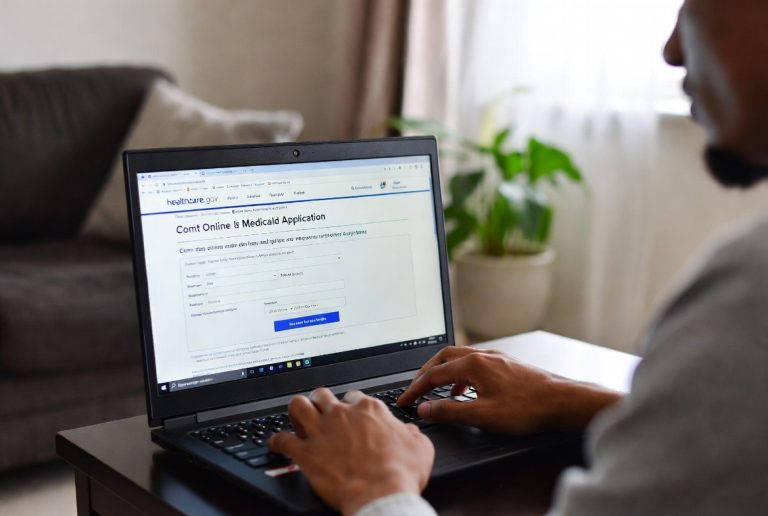
To apply, you will generally need to complete an application form provided by the manufacturer. Many companies now offer online applications, though some still require paper forms. Your doctor will usually need to sign the application to verify your diagnosis and prescription. You will also need to provide proof of income, which can include a recent tax return, pay stubs, a Social Security benefits statement, or a signed letter stating your income if you have no formal documentation.
Tips for a Successful Application
Start the process as soon as possible. Most PAP applications take two to four weeks to process, and some can take longer. If you are running low on medication, ask your doctor for samples to bridge the gap while your application is reviewed. Many pharmaceutical representatives leave samples at doctor’s offices specifically for this purpose.
Be thorough and accurate when completing your application. Missing information is the most common reason for delays and denials. Double-check that your doctor has signed all required sections and that your income documentation matches the information on your application. If you are self-employed or have irregular income, include a written explanation along with whatever documentation you can provide.
If your application is denied, do not give up. Contact the program to find out why you were denied and whether you can appeal. Sometimes a denial is simply due to a paperwork error or missing document that can be easily corrected. If you are denied because your income is too high, ask whether the company offers a separate copay assistance program or discount card that could still reduce your costs.
Other Ways to Reduce Medication Costs
While PAPs are one of the most powerful tools for getting free medications, they are not the only option. Generic medications are significantly cheaper than brand-name drugs, and your doctor may be able to switch you to a generic alternative that works just as well. Pharmacy discount programs like GoodRx and RxSaver can also dramatically reduce the cash price of prescriptions at local pharmacies.
State pharmaceutical assistance programs, sometimes called SPAPs, provide additional help for residents of certain states. These programs vary widely but can cover copays, provide free medications, or offer supplemental coverage for people who fall through the cracks of other programs. Contact your state’s Department of Health or Aging to find out what is available where you live.
Community health centers that receive federal funding through the 340B Drug Pricing Program are required to offer medications at deeply discounted prices. If you receive your primary care at a Federally Qualified Health Center, ask about their pharmacy services and whether you can access 340B pricing.
Do Not Go Without Your Medication
Skipping doses or stopping medication entirely because of cost is dangerous and, in many cases, completely unnecessary. The resources described here exist specifically to prevent that from happening. If you are struggling to afford your prescriptions, take action today. Talk to your doctor, contact the manufacturer, or call one of the hotlines listed above. Help is available, and in many cases, your medication can be provided at absolutely no cost to you.