Community Gardens: How to Grow Free Food in Your Neighborhood
Fresh produce is expensive, and for families in food deserts where grocery stores are miles away, it can be nearly impossible to find affordable fruits and vegetables. Community gardens offer a practical solution: a shared space where neighbors can grow their own food for little or no cost. Whether you have gardening experience or have never planted a seed, a community garden can help you put fresh, healthy food on your table.
What Is a Community Garden?
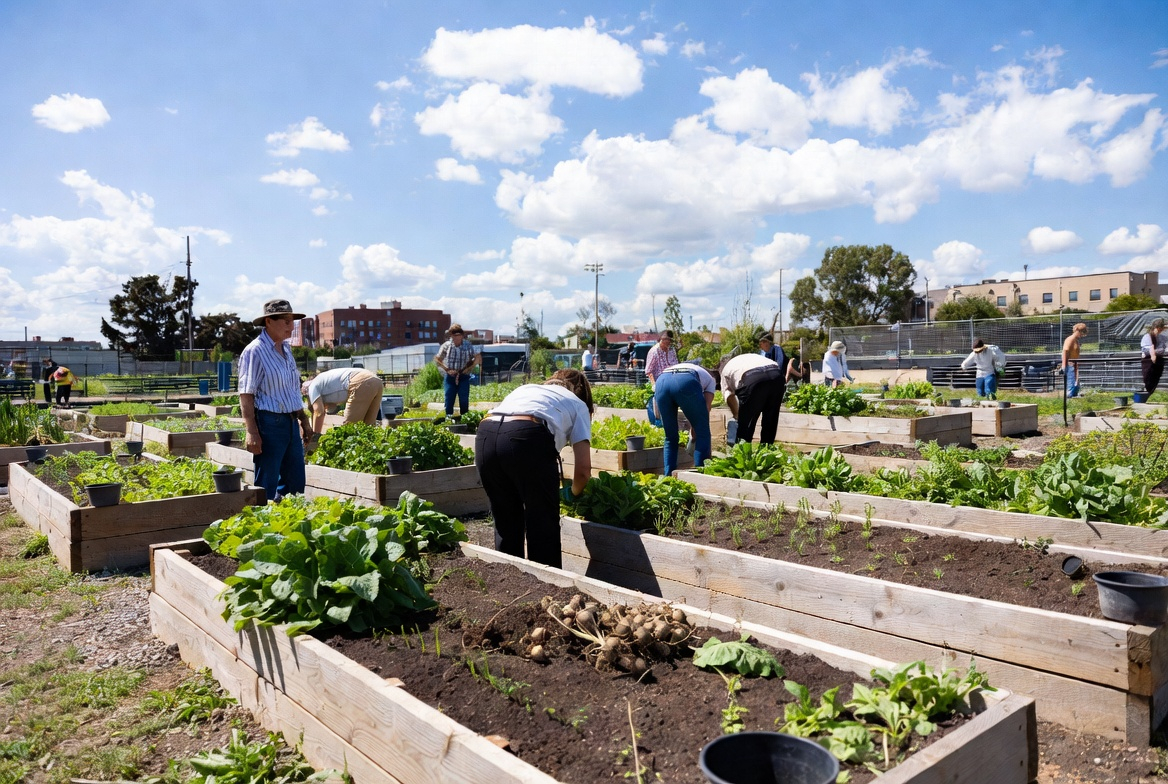
A community garden is a shared piece of land where individuals and families can grow food, flowers, and herbs. Gardens are typically divided into individual plots that members tend on their own, though some gardens operate collectively where everyone works together and shares the harvest. Community gardens can be found on vacant lots, church properties, school grounds, public parks, and even rooftops in urban areas.
Most community gardens charge a small annual fee, typically between $10 and $50, to cover the cost of water, tools, and maintenance. Many gardens waive this fee for low-income families or offer scholarships. Some gardens are entirely free. The value of the food you can grow in a single season far exceeds any plot fee, with some estimates suggesting a 4-by-8-foot garden bed can produce $300 to $600 worth of produce per growing season.
How to Find a Community Garden Near You
The American Community Gardening Association maintains a searchable database of community gardens at communitygarden.org. You can search by zip code to find gardens near you, along with contact information and details about each garden.
Your local parks and recreation department is another excellent resource. Many municipalities operate community gardens on public land and can tell you about available plots, fees, and how to join. City or county cooperative extension offices, which are run through land-grant universities, often maintain lists of community gardens and can provide gardening advice specific to your region.
Local food banks and community organizations sometimes operate gardens as part of their hunger relief programs. These gardens may specifically serve low-income families and often provide seeds, tools, and gardening instruction at no cost.
Churches, mosques, synagogues, and other houses of worship frequently host community gardens on their properties. These gardens are often open to the entire community regardless of religious affiliation.
Getting Started Without Experience
You do not need any gardening experience to succeed in a community garden. Most gardens are welcoming to beginners, and experienced gardeners are usually happy to share advice. Many community gardens offer workshops, classes, or mentorship programs specifically for new gardeners.
Start with easy-to-grow crops that produce a lot of food in a small space. Tomatoes, zucchini, green beans, lettuce, kale, peppers, and herbs like basil and cilantro are all excellent choices for beginners. These crops are forgiving of mistakes and produce abundantly throughout the growing season.
Your local cooperative extension office offers free gardening advice tailored to your specific climate and soil conditions. Extension agents can tell you the best planting dates for your area, which varieties grow well locally, and how to deal with common pests and diseases. This is one of the most valuable free resources available to gardeners.
Free and Low-Cost Resources for Gardeners
Seeds can be obtained for free through seed libraries, which operate similarly to book libraries. You borrow seeds, grow your plants, and save seeds from your harvest to return to the library for others to use. Seed libraries are often located in public libraries, community centers, and cooperative extension offices.
Many communities hold annual seed swaps where gardeners trade seeds from their collections. These events are a great way to get a variety of seeds for free while meeting other gardeners in your area.
Free compost is available in many areas through municipal composting programs. Some cities offer free compost pickup days or will deliver compost to community gardens. Compost improves soil quality and helps your plants grow stronger and produce more food.
Garden tools are typically provided by the community garden for shared use. If you need tools for your individual plot, check thrift stores, garage sales, and online community groups where gardening tools are frequently available for free or at minimal cost.
Benefits Beyond Free Food
Community gardens provide much more than produce. Studies show that people who participate in community gardens eat significantly more fruits and vegetables than those who do not. Gardening is moderate physical exercise that improves strength, flexibility, and cardiovascular health. Time spent outdoors in a garden reduces stress, anxiety, and depression.
For children, gardening teaches responsibility, patience, and a connection to where food comes from. Kids who grow their own vegetables are far more likely to eat them. Many community gardens welcome families and offer youth programs that combine gardening with nutrition education.
Perhaps most importantly, community gardens build community. They bring together people of different ages, backgrounds, and cultures around a shared activity. The friendships and support networks that form in community gardens strengthen the social fabric of the entire neighborhood.
Starting a Garden If One Does Not Exist
If there is no community garden in your area, consider starting one. The American Community Gardening Association provides free resources and guides for starting a community garden from scratch. You will need to find a suitable piece of land, secure permission from the landowner, recruit members, and organize basic infrastructure like water access and fencing.
Many cities offer grants or technical assistance for new community gardens, especially in underserved neighborhoods. Contact your city council representative, parks department, or local food policy council to ask about available support.
A community garden is one of the most direct ways to fight food insecurity at the neighborhood level. A small plot of land and a little bit of effort can produce hundreds of dollars worth of fresh, nutritious food every year, and the benefits extend far beyond what ends up on your plate.